




Price: $429.99
(as of 2026-10-15 15:37 GMT+0000 – Details)

Processor, Memory, and Storage Performance
The laptop is powered by an Intel N150 quad‑core processor that can reach 3.6 GHz turbo frequency and includes 6 MB of cache. Paired with 8 GB of LPDDR5‑4800 RAM, the system delivers responsive handling of typical office workloads such as web browsing, document editing, and video streaming. The 128 GB UFS 2.2 storage provides fast boot times and quick application launches, while the integrated Intel Graphics handles basic visual tasks and media playback. For more demanding workloads—such as large‑scale data analysis, modern gaming, or intensive video rendering—the limited core count, modest graphics capability, and relatively small storage capacity become bottlenecks, so users should temper expectations accordingly.
Display Characteristics and Camera Features
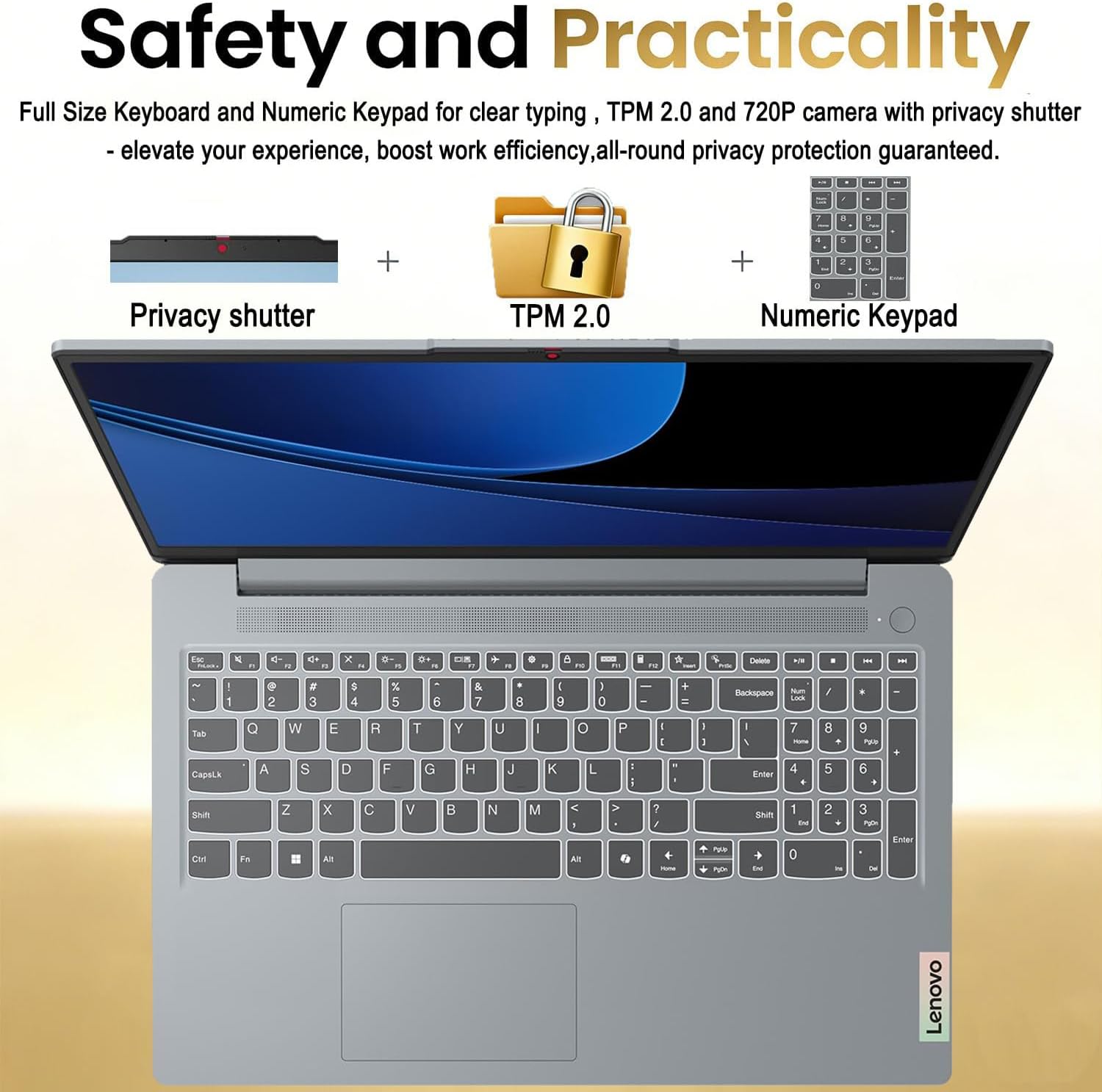
The 15.6‑inch Full HD panel (1920 × 1080) uses a TN technology with a 250‑nit brightness rating and an anti‑glare coating, yielding an 88 % screen‑to‑body ratio and 45 % NTSC color coverage. The anti‑glare surface reduces reflections in bright environments, helping to lessen eye strain during extended sessions. Wide viewing angles are advertised, though TN panels typically exhibit narrower color consistency off‑axis compared with IPS alternatives. A 720p HD webcam includes a physical privacy shutter, and dual‑array microphones aim to capture clear audio for video calls, making the device suitable for online classes and remote meetings.
Wireless and Wired Connectivity
Connectivity is built around Wi‑Fi 6 (802.11ax 2×2) and Bluetooth 5.2, offering faster throughput and better performance in congested networks than previous standards. The port selection includes two USB‑A 5 Gbps ports, a single USB‑C port that supports Power Delivery (45–65 W) and DisplayPort 1.2 for external monitors, an HDMI 1.4 output, a full‑size SD card reader, and a 3.5 mm audio jack. This arrangement enables dual‑display setups and straightforward peripheral expansion, though the single USB‑C port limits simultaneous charging and video output unless a hub is used.
Software Bundle and Operating System
Windows 11 Home ships pre‑installed, providing a modern interface with enhanced multitasking features such as Snap Layouts and integrated security tools. The package also includes a one‑year Microsoft 365 Personal subscription, granting access to premium versions of Word, Excel, PowerPoint, and Outlook, plus 1 TB of OneDrive cloud storage. This software bundle adds immediate productivity value for students and professionals who rely on the Office suite, but the subscription expires after twelve months unless renewed, after which only the locally installed apps remain functional.
Build Quality, Portability, and Power
The chassis weighs 3.42 lb (1.55 kg) and measures 0.70 in (17.9 mm) thick, clad in an Arctic Grey PC‑ABS finish. It has passed MIL‑STD‑810H testing across 21 criteria, indicating resistance to shock, vibration, temperature extremes, and humidity. A 65 W USB‑C adapter supports fast charging, and the device carries ENERGY STAR 9.0, EPEAT Silver, and TÜV Low Blue Light certifications, reflecting energy efficiency and reduced blue‑light emission. The non‑backlit keyboard and buttonless Mylar Precision TouchPad (69 × 104 mm) are functional but lack illumination for low‑light typing.
Intended Use Cases and Practical Limitations
Marketing positions the laptop for students managing coursework, remote workers handling email and video conferences, families sharing a home computer, and budget‑conscious buyers seeking maximum value. The hardware comfortably supports web browsing, streaming, document creation, and light multitasking. However, the modest 128 GB storage, entry‑level integrated graphics, and TN display with limited color gamut make it unsuitable for intensive creative work, modern gaming, or professional color‑critical tasks. Users planning to store large media libraries or run demanding applications should consider external storage or a higher‑spec model.