



Price: $1,999.00 $1,849.00
(as of 2026-10-15 15:12 GMT+0000 – Details)

Processor and Core Architecture
The 2025 MacBook Pro is powered by Apple’s M5 chip, which integrates a 10‑core CPU and a 10‑core GPU on a single die. This unified architecture allows the processor to share the 16 GB of unified memory directly with both compute units, reducing latency for data‑intensive tasks such as video encoding, 3D rendering, and large‑scale data analysis. The CPU’s performance cores handle single‑threaded workloads efficiently, while the efficiency cores manage background processes, contributing to the claimed all‑day battery life. Because the memory is not user‑upgradeable, the 16 GB ceiling may become a bottleneck for professionals who routinely run multiple virtual machines or massive datasets.
On‑Device AI Acceleration
Each GPU core includes a Neural Accelerator, a dedicated matrix‑multiply engine designed for machine‑learning inference. This hardware enables the MacBook Pro to execute Apple Intelligence features — such as real‑time text generation, image‑based search, and on‑device speech recognition — without sending data to the cloud. The practical benefit is lower latency and stronger privacy guarantees, as the system can keep personal data locally. However, the AI performance is bounded by the 10‑core GPU and the 16 GB memory pool; extremely large models or batch‑processing workloads may still require external GPU resources or cloud offload.
Liquid Retina XDR Display Characteristics
The 14.2‑inch Liquid Retina XDR panel delivers a peak brightness of 1 600 nits and a sustained brightness of 1 000 nits, paired with a 1 000 000:1 contrast ratio. These specifications make the screen suitable for HDR content creation, color‑critical photo editing, and outdoor visibility. The display supports the full P3 wide‑color gamut and True Tone technology, adapting white balance to ambient light. A limitation is the fixed 14.2‑inch size; users needing a larger canvas for multi‑window workflows must rely on external monitors, which the system can drive up to two simultaneously.
Battery Life and Power Parity
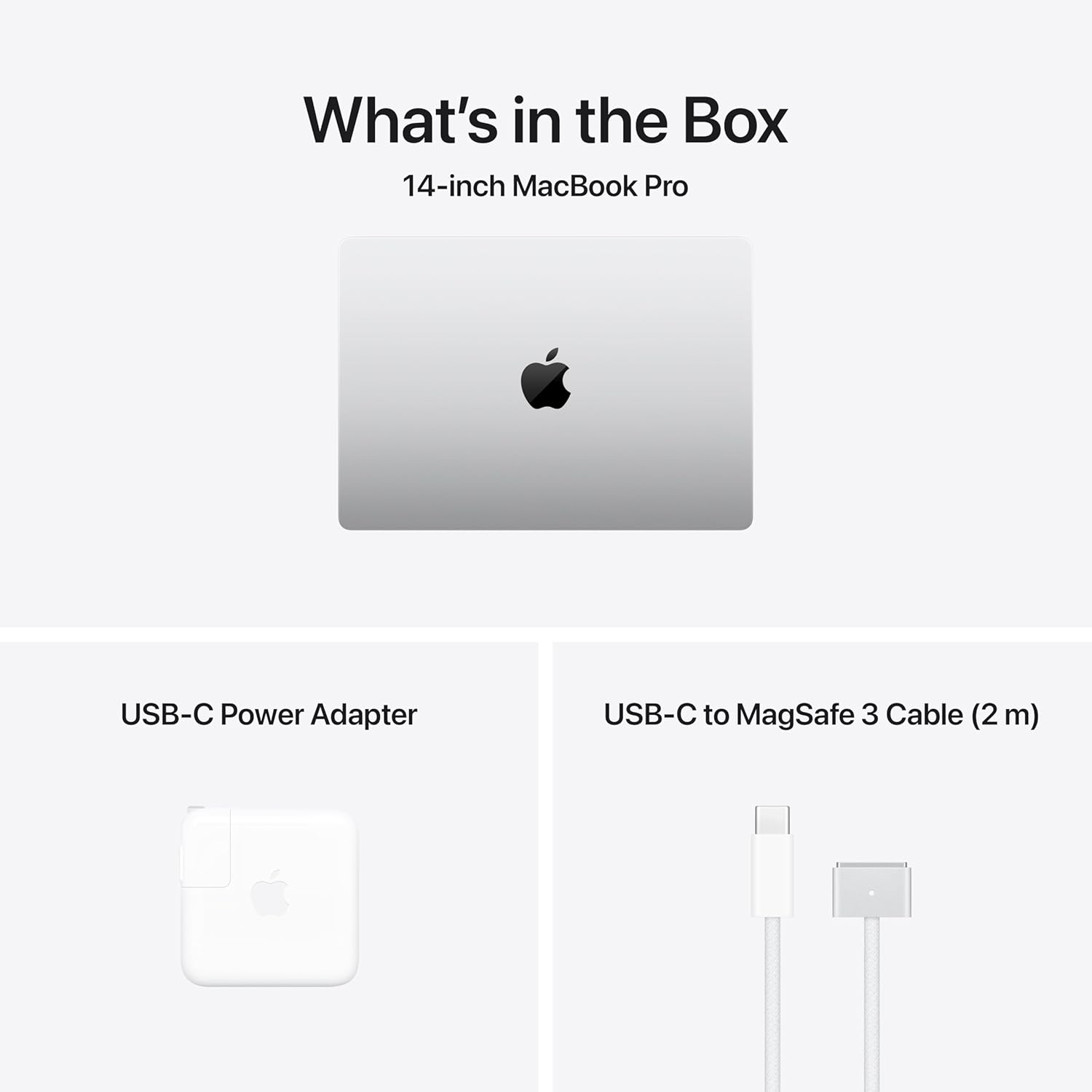
Apple states that the MacBook Pro provides “all‑day battery life” and delivers identical performance whether powered by the internal battery or connected to the MagSafe 3 charger. This parity is achieved through the M5’s power‑efficient design and the unified memory architecture, which avoids the overhead of discrete memory controllers. In practice, “all‑day” will vary with workload intensity; sustained GPU‑heavy tasks such as 3D rendering will drain the battery faster than light productivity work. The 3.41‑pound chassis houses a single lithium‑ion cell, and the MagSafe 3 port supports fast charging, though exact wattage figures are not disclosed in the supplied data.
Connectivity and Expansion Options
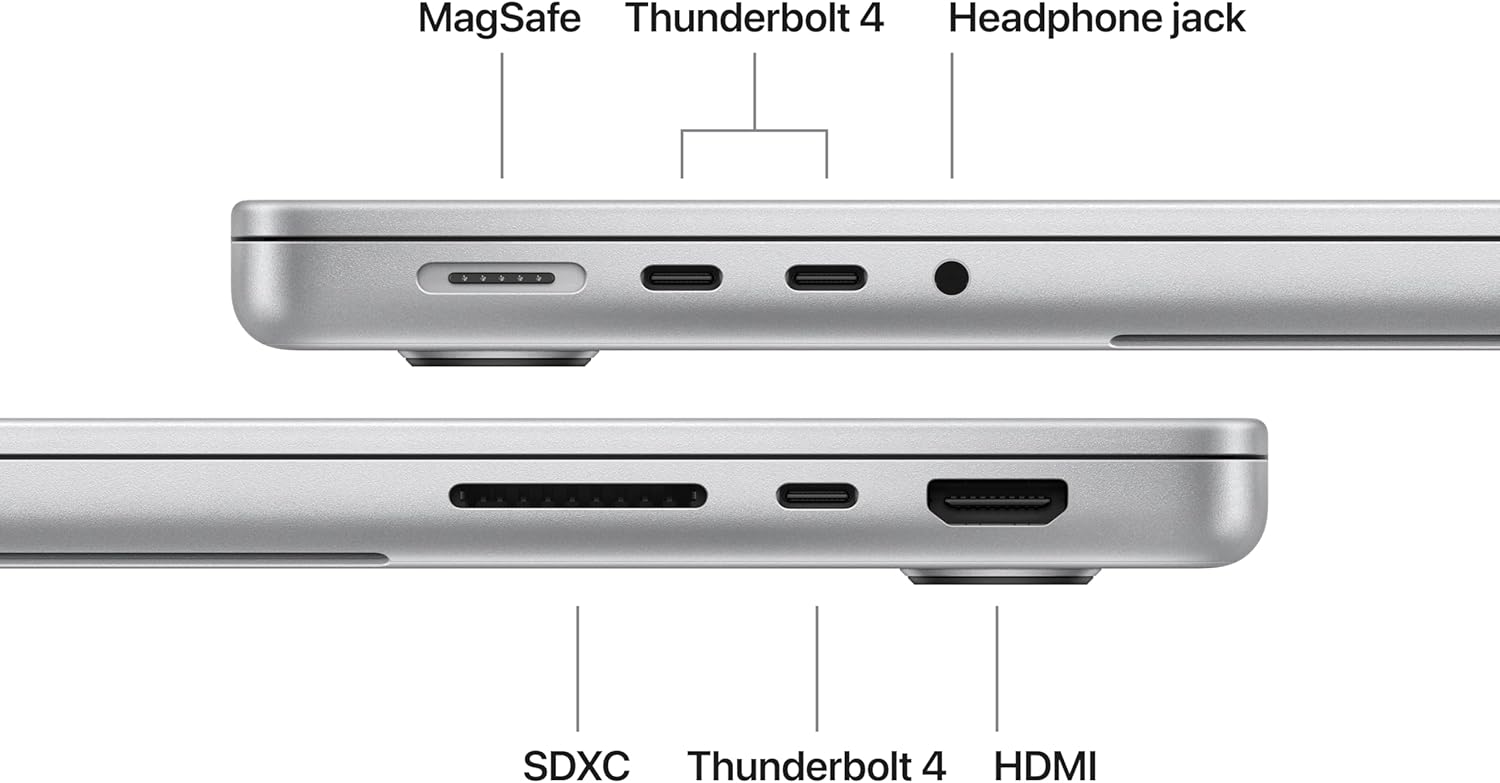
The port selection includes three Thunderbolt 4 (USB‑C) ports, a MagSafe 3 charging port, an SDXC card slot, an HDMI port, and a 3.5 mm headphone jack. Thunderbolt 4 provides up to 40 Gb/s bandwidth, enabling high‑speed external storage, docks, and up to two 6K external displays. The HDMI port supports a single 4K display at 60 Hz, useful for presentations. The SDXC slot accommodates UHS‑II cards for quick media offload. Notably absent are USB‑A ports and an Ethernet jack, so legacy peripherals require adapters. The system’s wireless capabilities (Wi‑Fi/Bluetooth versions) are not detailed in the provided information.
Camera, Audio, and Collaboration Features
A 12 MP Center Stage camera keeps the user centered during video calls by automatically panning and zooming, which is valuable for remote meetings and content creation. Three studio‑quality microphones form a directional array that reduces background noise, while the six‑speaker system supports Spatial Audio with Dolby Atmos, delivering immersive playback for media consumption and mixing. These integrated AV components reduce the need for external webcams or microphones in most professional scenarios. However, the camera’s fixed 12 MP resolution may not satisfy users requiring higher‑resolution capture for specialized streaming or recording workflows.
Ecosystem Integration and Practical Considerations
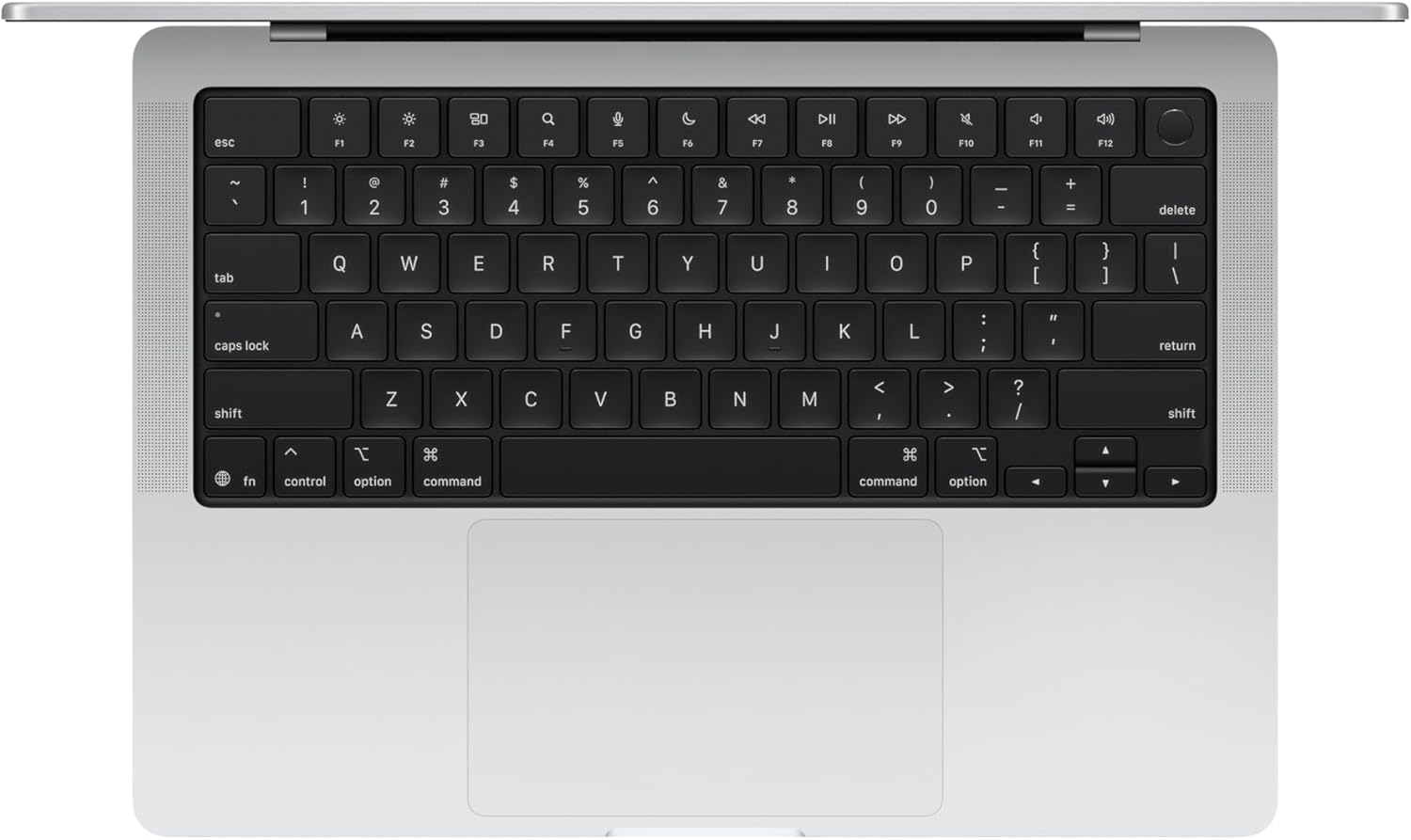
macOS continuity features such as iPhone Mirroring, universal clipboard, and shared Messages/FaceTime calls create a seamless workflow for users already invested in Apple’s ecosystem. Apps like Microsoft 365 and Adobe Creative Cloud run natively on Apple Silicon, benefiting from the M5’s performance without translation layers. Practical constraints include the non‑upgradeable 16 GB unified memory and 1 TB SSD, which may limit longevity for power users; the two‑display external limit may restrict multi‑monitor setups; and the lack of detailed wireless specifications makes it difficult to assess network performance for cloud‑heavy workloads. These factors should be weighed against the device’s strengths when planning a purchase.