




Price: $689.00
(as of 2026-10-15 15:14 GMT+0000 – Details)

Design, Portability, and Materials
The MacBook Neo adopts a 13‑inch aluminum chassis that measures 8.12 × 11.71 × 0.5 inches and weighs 2.71 pounds, making it easy to carry between classes or workspaces. The enclosure incorporates recycled aluminum, reaching 60 percent recycled content by weight, which is the highest proportion Apple has used in any product to date. Four finish options — Silver, Blush, Citrus, and Indigo — each ship with a color‑matched keyboard, allowing a degree of personalization without compromising the uniform build quality. The slim profile and lightweight construction suggest the device will fit comfortably in most backpacks and briefcases, while the durable aluminum should resist everyday knocks and flex.
Processor, Memory, and AI‑Focused Performance
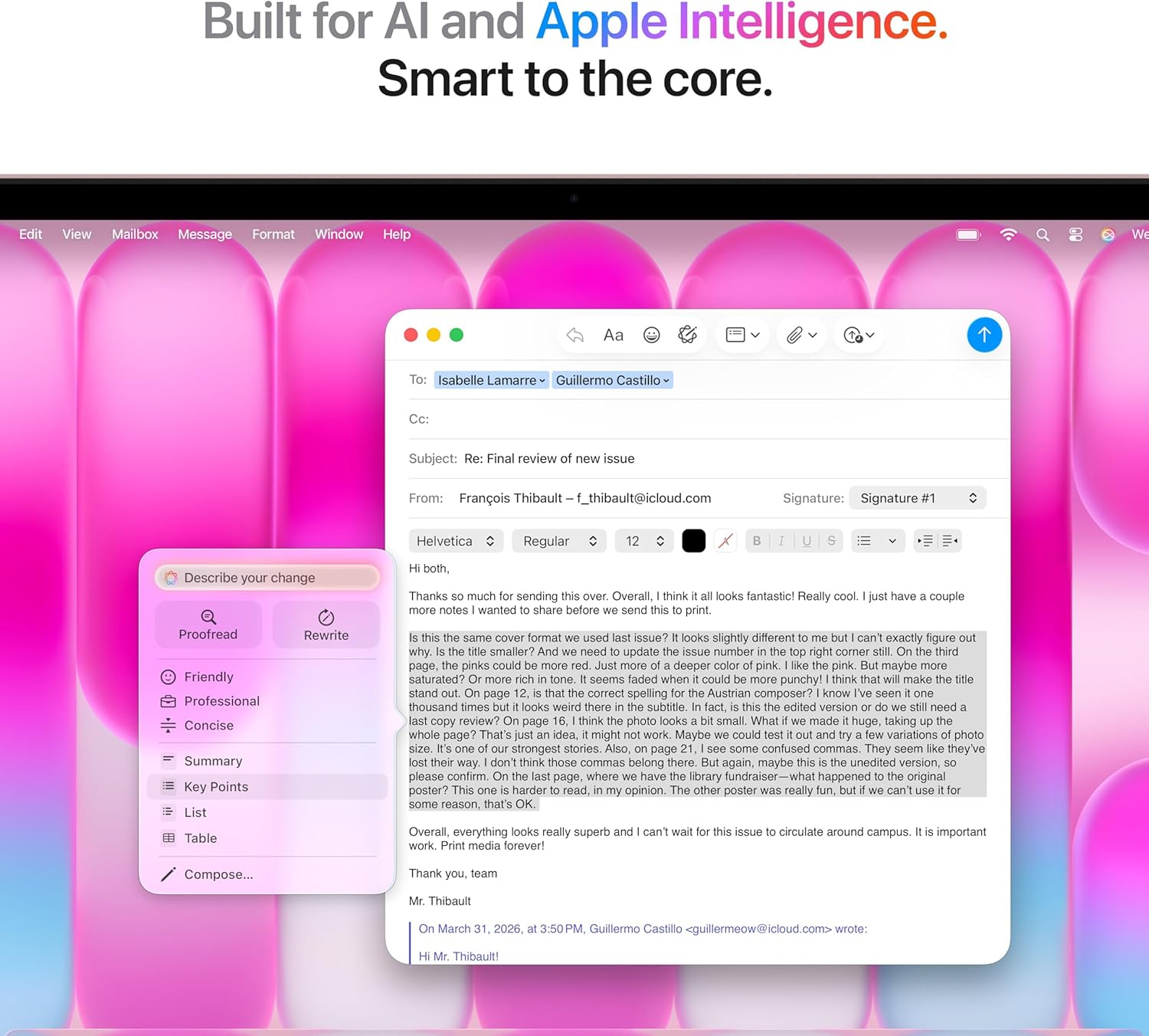
At the core sits the A18 Pro chip, a silicon design that integrates CPU, GPU, and a dedicated neural engine to accelerate on‑device machine‑learning tasks. The system ships with 8 GB of unified memory and a 256 GB SSD, a configuration that supports the advertised Apple Intelligence features such as note summarization, writing assistance, and real‑time transcription. Because the memory is unified, both the CPU and GPU share the same pool, which can improve throughput for AI workloads but also means the 8 GB ceiling may become a bottleneck for heavy multitasking or large‑model inference. The 256 GB storage capacity is modest for users who keep large media libraries or virtual machines locally, so external drives or cloud storage may be required for extensive datasets.
Battery Life and All‑Day Usage
Apple claims up to 16 hours of battery life on a single charge, a figure derived from typical web browsing and video playback scenarios. In practice, this translates to the ability to span a full day of lectures, study sessions, and light creative work without needing a power outlet. The actual runtime will vary with screen brightness, background processes, and the intensity of AI‑driven tasks, which can draw more power from the neural engine. Users who regularly run demanding workloads — such as training models or rendering video — should expect noticeably shorter endurance and may need to carry the 30‑W USB‑C charger for mid‑day top‑ups.
Liquid Retina Display Quality
The 13‑inch Liquid Retina panel supports a billion colors, delivering wide‑gamut coverage that benefits photo editing, video streaming, and presentation graphics. While the exact resolution and pixel density are not disclosed in the supplied material, the “Liquid Retina” branding historically indicates a pixel density high enough to make individual pixels indistinguishable at normal viewing distances. The display’s brightness and contrast characteristics are not specified, so performance in bright outdoor environments or HDR content cannot be guaranteed from the provided information alone.
Camera, Microphone, and Audio System
A 1080p FaceTime HD camera sits above the screen, paired with a dual‑mic array designed to isolate the speaker’s voice and reduce ambient noise. Two side‑firing speakers provide stereo output, aiming to create a more immersive soundstage for video calls, media consumption, and casual gaming. This combination should suffice for typical remote‑learning or collaboration scenarios, though professionals requiring studio‑grade capture may still prefer external microphones and cameras. The audio hardware is integrated, so there is no mention of a headphone jack; users will rely on USB‑C or Bluetooth peripherals for wired audio connections.
macOS Ecosystem and Continuity Features
Running macOS, the Neo benefits from the operating system’s optimized app launch times and background management, which Apple states make “all your go‑to apps run lightning fast.” Built‑in apps such as FaceTime, Messages, Safari, and the iWork suite are pre‑installed and tuned for the A18 Pro architecture. Continuity features enable seamless hand‑off between the Mac and an iPhone: users can view and control the iPhone screen from the Mac, start an email on one device and finish it on the other, transfer photos instantly via AirDrop, and place or receive calls without touching the phone. These integrations assume the user owns a compatible iPhone running a recent iOS version; otherwise the cross‑device benefits are unavailable.
Practical Limitations and Considerations
While the Neo targets students and light professionals with an attractive price point, several constraints merit attention. The 8 GB unified memory cannot be upgraded after purchase, limiting future‑proofing for memory‑intensive AI workloads or virtual machines. The 256 GB SSD likewise lacks user‑replaceable expansion, so long‑term storage planning may require cloud subscriptions or external drives. The product description does not enumerate port selection, Thunderbolt support, or external display capabilities, which are critical for users needing multiple monitors or high‑speed peripherals. Finally, the “up to 16 hours” battery claim is a best‑case figure; real‑world usage involving AI processing, high brightness, or peripheral charging will reduce actual runtime.