


Price: $1,589.99
(as of 2026-10-15 20:44 GMT+0000 – Details)

Performance Overview
The ThinkPad P16s Gen 4 is built around the AMD Ryzen AI 7 350 processor, which delivers eight cores and sixteen threads with a base clock of 2.0 GHz and a boost capability up to 5 GHz. The 16 MB cache helps keep frequently used data close to the cores, supporting demanding workloads such as large‑scale data analysis, simulation, and engineering calculations. Integrated graphics are provided by the AMD Radeon 860M, which shares system memory rather than offering dedicated video memory. This configuration is adequate for visualization, light CAD, and video playback, but it will not match the throughput of discrete workstation GPUs for heavy rendering or GPU‑accelerated compute tasks.
Memory and Storage
The unit ships with DDR5 SODIMM memory and a PCIe NVMe SSD, a combination that yields very fast boot times, rapid application launches, and quick access to large project files. The seller notes that the original seal was opened to perform certified RAM and SSD upgrades; those upgraded components carry a three‑year warranty from the reseller, while the remaining hardware retains the original one‑year manufacturer warranty. Users should be aware that any further memory or storage changes beyond the certified upgrade may affect the reseller’s warranty coverage.
Display Characteristics
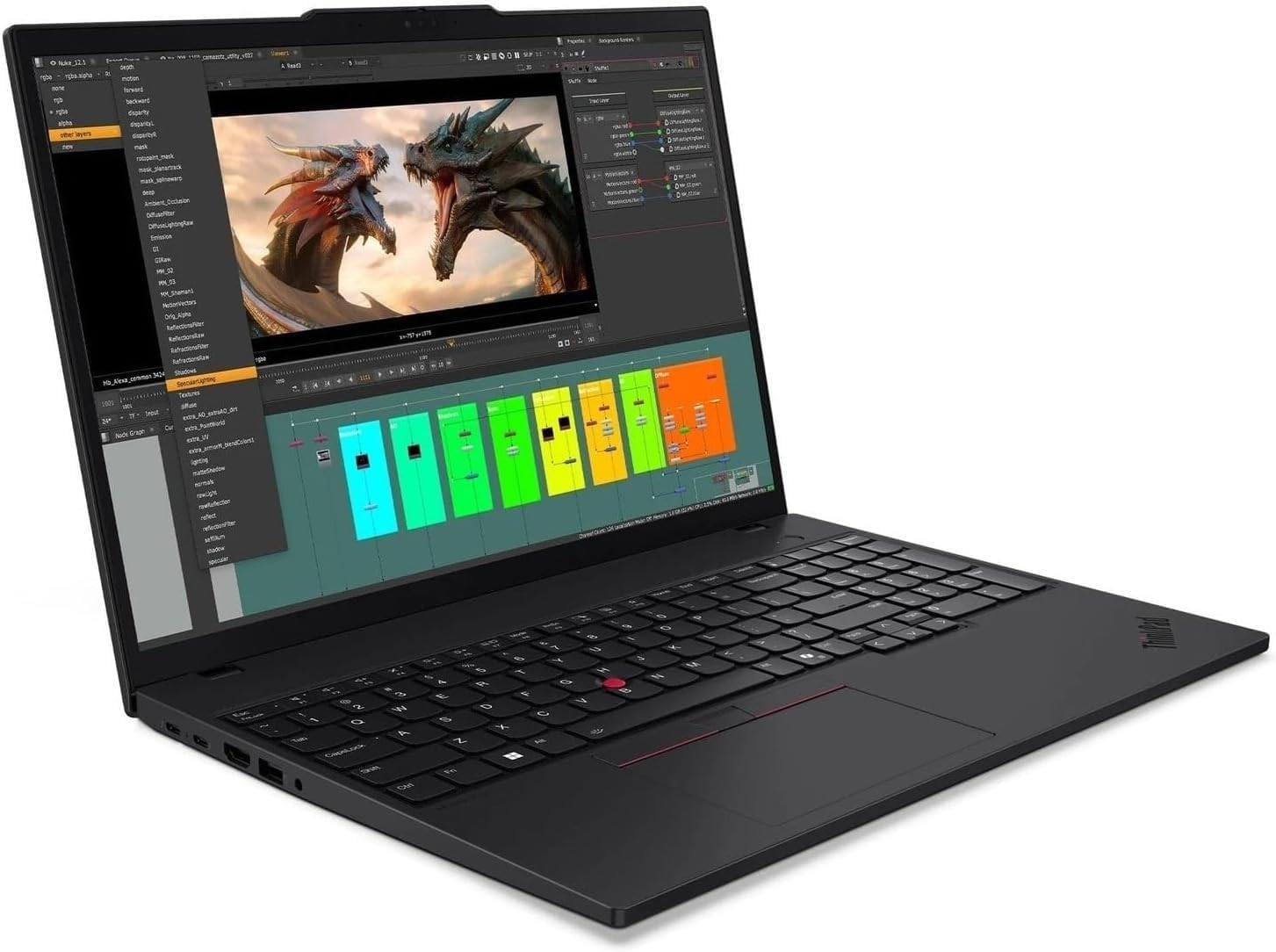
A 16‑inch 4K OLED touch panel (3840 × 2400) provides 400 nits of peak brightness, full 100 % DCI‑P3 color gamut coverage, anti‑glare and anti‑reflective coatings, and X‑Rite factory color calibration. These attributes make the screen well suited for color‑critical work such as photo editing, video grading, and design review, while the touch layer adds direct interaction for presentations or annotation. OLED technology offers deep blacks and high contrast, though prolonged static images can risk burn‑in, and the 400‑nit brightness may be limiting in brightly lit outdoor environments.
Connectivity Suite
The laptop includes a comprehensive port array: Wi‑Fi 7 (802.11be) and Bluetooth 5.4 for modern wireless performance, an RJ‑45 Ethernet jack for wired stability, HDMI output, two Thunderbolt 4 ports (USB‑C with 40 Gbps bandwidth, DisplayPort Alt Mode, and power delivery), and a 3.5 mm headphone/microphone combo jack. This selection supports multiple external 4K displays, high‑speed storage peripherals, and wired networking simultaneously. The only notable omission is a traditional USB‑A port, so legacy peripherals will require an adapter or hub.
Security and Input Features
Biometric security is handled by a 5 MP RGB + IR webcam equipped with a physical privacy shutter and a fingerprint reader integrated into the power button, enabling Windows Hello facial and fingerprint authentication. The backlit keyboard includes a full numeric keypad, which benefits spreadsheet‑heavy workflows and data entry. While the webcam resolution is sufficient for video conferencing and Windows Hello, it may not meet the quality expectations of professional streaming or high‑resolution content creation without an external camera.
Power and Battery Considerations
Power delivery uses a 65 W USB‑C adapter with Type‑C power‑in, and the system houses a 4‑cell 86 Wh battery that the vendor claims provides all‑day runtime. USB‑C charging adds flexibility for travel and docking scenarios. However, the 65 W limit can constrain sustained turbo performance under heavy multi‑core loads, and the high‑resolution OLED panel consumes more power than typical IPS screens, so real‑world battery life will vary significantly with brightness settings and workload intensity.